
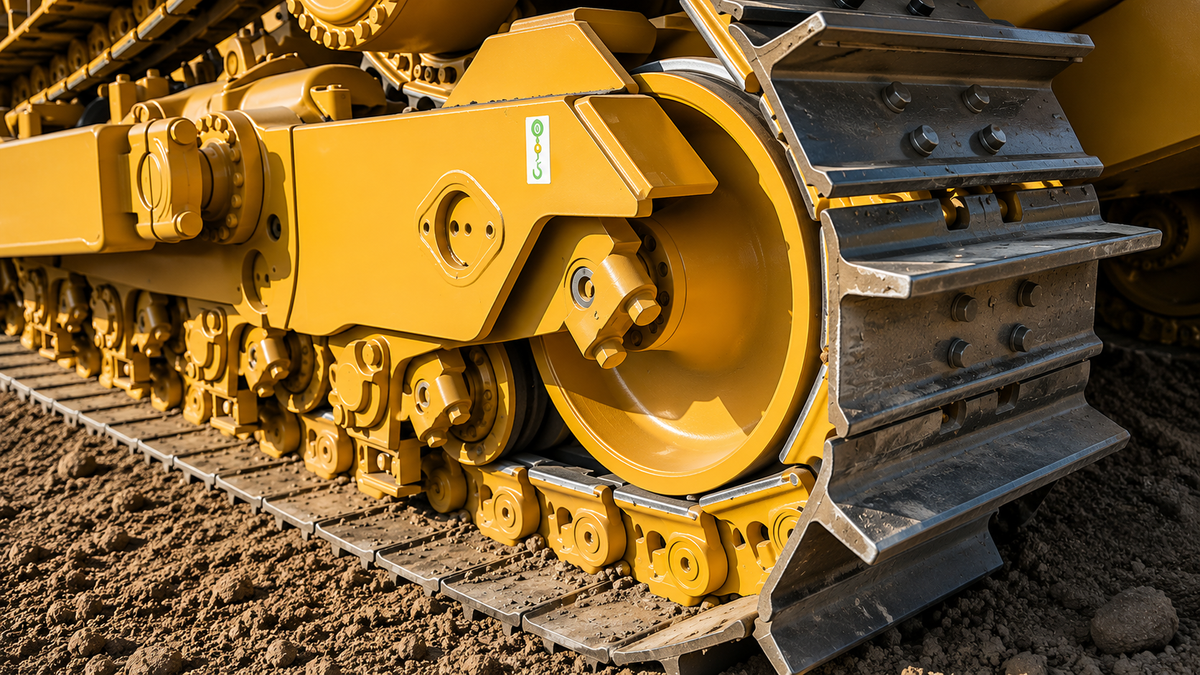
The undercarriage is one of the most expensive areas to maintain on a tracked machine, but it's also one of the easiest to overlook. Regular inspections, proper operating practices, and timely maintenance can help reduce wear, prevent unexpected downtime, and get more hours out of your undercarriage components.
At IronTrack Supply, we work with undercarriage components every day, including track groups, track shoes, rollers, idlers, sprockets, and rubber tracks. Here are 10 practical tips that can help you get more life out of your machine's undercarriage.
1. Inspect Your Undercarriage Regularly
One of the simplest ways to prevent expensive repairs is to inspect your undercarriage regularly.
Don't wait until you hear a strange noise or a track comes off.
Look for:
- Excessive track sag
- Uneven track wear
- Cracked or damaged track shoes
- Worn sprocket teeth
- Leaking rollers
- Damaged or seized rollers
- Idler wear
- Loose track hardware
- Damaged track links
- Packed dirt and debris
A quick inspection at the beginning or end of the workday can help identify problems before they become major repairs.
2. Keep Your Undercarriage Clean
Mud, dirt, rocks, clay, snow, and other debris can accumulate inside the undercarriage.
Packed material can interfere with rollers, idlers, sprockets, and track movement while increasing wear.
After working in particularly muddy or abrasive conditions, take the time to clean the undercarriage.
Pay particular attention to the areas around the:
Sprocket → Track Rollers → Idler → Track Frame
Keeping these areas clean also makes it much easier to spot damaged or worn components.
3. Maintain Proper Track Tension
Track tension is extremely important.
A track that's too loose can increase the risk of de-tracking and improper engagement with the sprocket.
A track that's too tight can increase stress and accelerate wear on the track and other undercarriage components.
Always follow the manufacturer's specifications for your specific machine when checking and adjusting track tension.
Don't guess.
The correct tension can vary significantly between machine makes and models.
4. Avoid Excessive Counter-Rotation
One of the quickest ways to increase track wear is unnecessary aggressive turning.
Counter-rotating a tracked machine—spinning one track forward while the other moves backward—puts significant stress on the tracks and undercarriage.
Whenever possible, use smooth, controlled turns instead of aggressively spinning the machine in place.
This is particularly important when working on hard surfaces such as:
- Concrete
- Asphalt
- Packed gravel
- Rock
Smooth operation can make a noticeable difference in undercarriage life.
5. Pay Attention to the Direction You're Operating
Tracked equipment doesn't wear evenly in every application.
Working continuously in one direction or performing repetitive turns in the same direction can contribute to uneven wear.
If the job allows it, vary your travel direction and turning patterns.
This can help distribute wear more evenly across the undercarriage.
6. Avoid Sharp Objects Whenever Possible
Rubber tracks are particularly vulnerable to sharp objects.
Construction sites can contain:
- Rebar
- Scrap metal
- Broken concrete
- Sharp rock
- Tree roots
- Steel debris
Try to avoid driving directly over these materials whenever practical.
A single sharp object can damage a rubber track or create a cut that eventually becomes a much larger problem.
7. Check Your Rollers and Idlers
Your track doesn't operate by itself.
Rollers and idlers are critical components of the undercarriage system.
During inspections, look for:
- Oil leaking from rollers
- Seized rollers
- Excessive roller wear
- Damaged idlers
- Uneven wear
- Abnormal noises
A roller that isn't turning properly can create significant friction and accelerate track wear.
Replacing a worn roller early may prevent additional damage to the track and other components.
8. Inspect Your Sprockets
The sprocket is responsible for engaging with the track chain or rubber-track drive lugs.
As sprocket teeth wear, the engagement between the sprocket and track changes.
Severely worn sprockets can contribute to accelerated wear and poor track engagement.
When replacing a complete track group, it's always worth inspecting the sprockets at the same time.
New tracks installed on severely worn sprockets may not deliver the service life you expect.
9. Keep Track Hardware Tight
For machines using bolt-on track shoes, regularly inspect the track bolts and nuts.
Loose hardware can allow track shoes to move, creating additional wear and potentially damaging the track chain.
If you find loose or damaged hardware, address it promptly.
When installing new track shoes, follow the machine manufacturer's recommended tightening procedure and torque specifications.
10. Don't Wait Until Something Breaks
This may be the most important tip of all.
Undercarriage components generally don't fail without showing some signs of wear first.
If you notice:
Excessive noise → Investigate it.
Uneven wear → Find the cause.
Loose track → Check tension and components.
Leaking roller → Inspect or replace it.
Worn sprocket → Plan the repair.
Damaged track → Don't ignore it.
Addressing a small problem early is usually much easier—and less expensive—than repairing a complete undercarriage failure after it happens on the jobsite.
Understanding the Cost of Undercarriage Wear
Undercarriage wear is often cumulative.
A worn sprocket can affect the track.
A damaged roller can affect the track.
Incorrect track tension can affect multiple components.
Poor operating practices can accelerate wear throughout the entire system.
That's why undercarriage maintenance should be viewed as a system rather than a collection of individual parts.
Maintaining one component while ignoring another worn component may not solve the underlying problem.
When Should You Replace Undercarriage Components?
There's no single hour interval that applies to every machine.
Component life depends on factors such as:
- Machine size
- Ground conditions
- Application
- Operator habits
- Track tension
- Maintenance practices
- Component quality
- Amount of travel
- Abrasive material
- Turning habits
The best approach is to monitor wear over time and plan replacements before components reach the point of failure.
IronTrack Supply: Your Undercarriage Resource
At IronTrack Supply, our focus is undercarriage.
We offer components for a wide range of tracked construction and heavy equipment, including:
- Track Groups
- Track Chains
- Track Shoes
- Rubber Tracks
- Bottom Rollers
- Top Rollers
- Idlers
- Sprockets
- Sprocket Segments
- Track Bolts & Nuts
- Complete Undercarriage Solutions
Whether you're replacing one worn roller or rebuilding an entire undercarriage, getting the right component for your machine is important.
Not sure what you need? Contact us now!
Send us your machine make, model, and serial number, and our team can help identify the correct undercarriage components.
Keep Your Undercarriage Working. Keep Your Equipment Working.
Your undercarriage takes a beating every day.
A little maintenance can go a long way toward reducing downtime and maximizing the life of your investment.
IRONTRACK SUPPLY
QUALITY UNDERCARRIAGE. BUILT TO WORK.
Tracks. Rollers. Idlers. Sprockets. Track Shoes. And More.