
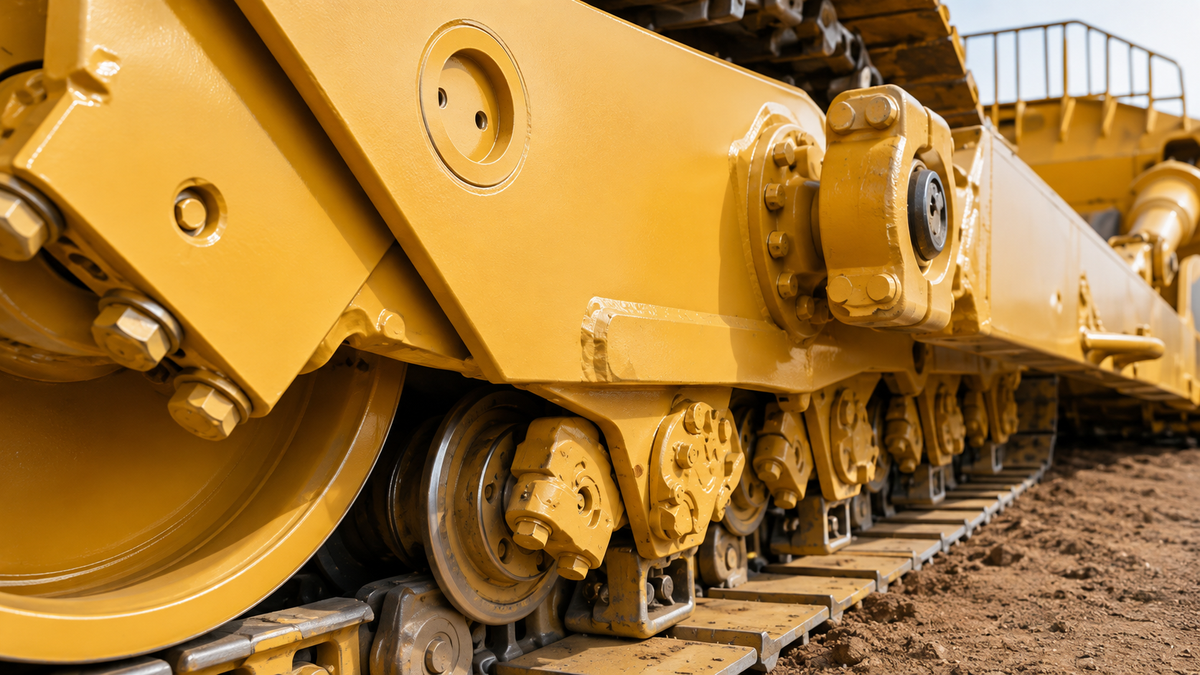
The undercarriage is one of the most important—and most expensive—systems on a tracked excavator. It supports the machine, transfers power to the ground, and takes constant abuse from dirt, rock, mud, and heavy loads.
Because undercarriage components wear gradually, it isn't always obvious when it's time for replacement.
Knowing what to look for can help you plan repairs, avoid unexpected downtime, and prevent one worn component from damaging another.
At IronTrack Supply, we help equipment owners identify and replace the undercarriage components their machines need. Here's what to look for when inspecting an excavator undercarriage.
What Makes an Excavator Undercarriage Wear?
Undercarriage wear is affected by much more than operating hours.
Factors include:
- Ground conditions
- Amount of travel
- Abrasive material
- Track tension
- Operator habits
- Turning practices
- Machine size
- Attachment use
- Maintenance
- Component quality
A machine working in soft soil may experience very different wear than the same machine working every day in rock or abrasive material.
That's why operating hours alone aren't enough to determine when an undercarriage needs to be replaced.
1. Look at the Track Links
The track chain is one of the first places to look when evaluating an excavator undercarriage.
Inspect the links for excessive wear, damaged areas, and abnormal contact patterns.
As the track chain wears, the relationship between the track chain, rollers, idler, and sprocket changes.
Severe chain wear can eventually affect the rest of the undercarriage.
Look for:
- Excessive link wear
- Abnormal side wear
- Damaged links
- Loose or damaged hardware
- Uneven wear
- Excessive track movement
If you're seeing significant wear throughout the chain, it may be time to consider a complete track group rather than replacing individual components.
2. Inspect the Track Shoes
Track shoes take the direct impact of the machine against the ground.
Look for:
- Worn grousers
- Cracks
- Bent shoes
- Broken shoes
- Loose bolts
- Missing bolts
- Excessive shoe wear
Heavily worn grousers reduce traction and can make the machine less effective in certain ground conditions.
If the shoes are severely worn but the track chain is otherwise serviceable, replacing the shoes may be an option.
3. Check the Bottom Rollers
Bottom rollers support the machine's weight and guide the track along the undercarriage.
A roller that's leaking, seized, damaged, or excessively worn deserves attention.
Signs of roller problems include:
- Oil leakage
- Excessive play
- Abnormal noise
- Uneven wear
- Rollers that don't rotate properly
- Visible damage
A seized roller can create significant friction and accelerate wear on the track chain.
Don't ignore a roller simply because the machine is still operating.
4. Inspect the Front Idler
The front idler helps guide and maintain the track.
Check the idler for:
- Uneven wear
- Damage
- Excessive play
- Abnormal movement
- Seal or lubrication issues
An idler that isn't functioning properly can contribute to abnormal track wear and alignment problems.
5. Check the Sprocket
The sprocket transfers power from the final drive into the track chain.
As the sprocket wears, the shape of the teeth changes.
A severely worn sprocket can affect how the chain engages with the machine's drive system.
Look for:
- Pointed or hooked teeth
- Uneven tooth wear
- Excessive tooth wear
- Abnormal chain engagement
If you're replacing a track chain, always inspect the sprocket at the same time.
Installing a new track chain against a severely worn sprocket can result in accelerated wear.
6. Look for Uneven Wear
One of the most important things you can identify during an inspection is uneven wear.
If one portion of the undercarriage is wearing significantly faster than another, there may be an underlying problem.
Possible causes include:
- Incorrect track tension
- Worn rollers
- Damaged idlers
- Worn sprockets
- Operating habits
- Ground conditions
- Track alignment issues
Don't simply replace the visibly worn component without investigating why it wore differently in the first place.
7. Listen to the Machine
Your machine can often tell you something is wrong before you can see it.
Pay attention to:
- Grinding
- Popping
- Squealing
- Clicking
- Excessive track noise
- Unusual vibration
If your machine suddenly sounds different while traveling, stop and inspect the undercarriage.
A strange noise doesn't automatically mean a particular component has failed, but it is a good reason to investigate.
8. Check Track Tension
Proper track tension is critical.
A track that's too loose can increase the risk of de-tracking.
A track that's too tight can increase stress and wear throughout the undercarriage.
Always use your machine manufacturer's recommended procedure and specifications when checking track tension.
Never rely on a generic tension measurement for every excavator.
Different machines can have different requirements.
Should You Replace One Component or the Entire Undercarriage?
This is one of the most common questions equipment owners have.
The answer depends on the condition of the complete system.
For example, if your rollers are worn but the track chain, sprocket, idler, and shoes are still in good condition, replacing the rollers may make sense.
On the other hand, if the track chain, sprocket, rollers, and idler are all heavily worn, replacing individual components one at a time may not be the most economical solution.
Think of your undercarriage as a system.
The components work together:
Track Chain → Track Shoes → Rollers → Idler → Sprocket
When several components are approaching the end of their service life, it's worth evaluating the complete undercarriage before making a decision.
Don't Wait for a Failure
The worst time to discover your undercarriage needs work is when the machine is sitting on a jobsite and can't move.
Planning your undercarriage repairs gives you the opportunity to:
- Compare replacement options
- Order parts before you need them
- Schedule installation
- Minimize downtime
- Address related wear
- Budget for the repair
Preventative maintenance is almost always easier than an emergency repair.
What Information Do You Need to Order the Right Parts?
Before ordering replacement undercarriage, gather as much information about your machine as possible.
Ideally, have:
Machine make
Machine model
Serial number
Track shoe width
Number of track shoes
Number of rollers
Number of carrier rollers, if equipped
Sprocket configuration
This information can help ensure you're getting components that are properly matched to your machine.
IronTrack Supply Can Help
At IronTrack Supply, our focus is helping equipment owners find the right undercarriage components for their machines.
We supply a wide range of products, including:
- Complete track groups
- Track chains
- Track shoes
- Bottom rollers
- Top rollers
- Idlers
- Sprockets
- Sprocket segments
- Track bolts and nuts
- Rubber tracks
- Complete undercarriage solutions
Whether you're maintaining a single excavator or managing a fleet of machines, our goal is to make sourcing undercarriage easier.
If you're unsure what your machine needs, send us the make, model, and serial number. Our team can help you identify the correct components.
Keep Your Undercarriage Ahead of the Job
Your excavator's undercarriage is constantly working.
Regular inspections can help you catch wear early, plan repairs, and avoid unnecessary downtime.
Don't wait until a track comes off or a roller fails to start thinking about your undercarriage.
Inspect it. Maintain it. Replace it before it becomes a problem.
IRONTRACK SUPPLY
QUALITY UNDERCARRIAGE. BUILT TO WORK.
Tracks. Rollers. Idlers. Sprockets. Track Shoes. And More.